
Saladin Against the Machinery of Exclusion
The Satanic VersesThis conflict follows Saladin Chamcha’s collision with British immigration enforcement and racialized authority, as his chosen English identity is rejected through arrest, abuse, and detention.
increasing Bearing strength in each event
 decreasing
Bearing strength in each eventdecreasingThe Return to India
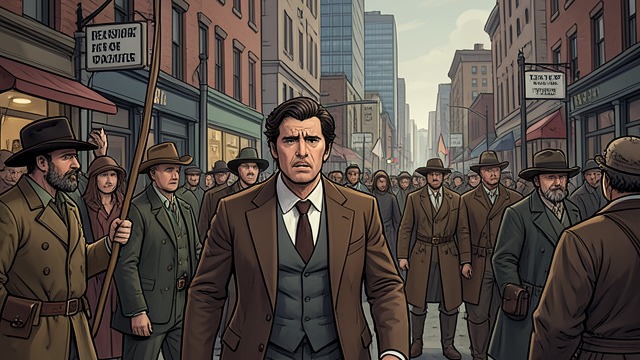
A Return That Undoes Him
The adopted voice falters
Saladin returns to Bombay confident in the English face, accent, and manners he has constructed. But the old city unsettles that performance: his discarded speech returns, his memories press back into consciousness, and people around him identify him as a deserter from the place he once called home.
Two incompatible claims
Zeenat Vakil challenges his belief that the protected world of Scandal Point represented Bombay as a whole. She insists that his childhood privilege and long absence have kept him from knowing the city’s poverty and conflict. Saladin resists her challenge, but his sense of belonging is already becoming unstable.
The conflict is not simply whether he is Indian or English. His carefully made identity depends on being accepted by England, while his return exposes how little control he has over the histories and voices he tried to leave behind.
Arrest on the Sussex Coast
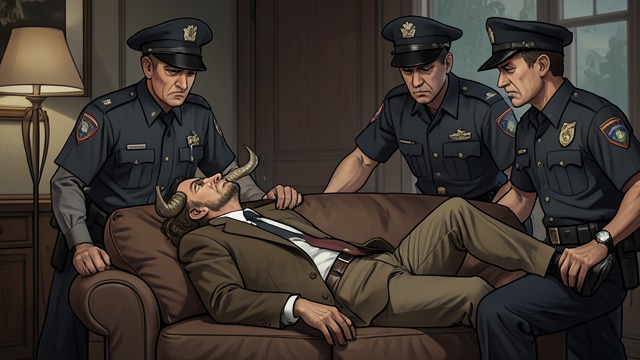
The Alien Made Visible
Misread as an intruder
Saladin wakes in Rosa Diamond’s house after the aircraft disaster, unable to explain his survival or produce identification. Immigration officers and police treat him as an illegal migrant rather than a British citizen, dismissing his account and responding to his protests with mockery and force.
The body becomes evidence
When his horns become visible, the officers treat them as proof that he is monstrous and therefore suspect. The encounter turns an inexplicable physical change into an opportunity for the authorities to deny his own account of who he is.
The arrest makes visible the gap between legal status and social recognition. Saladin’s citizenship cannot protect him when the people empowered to identify him have decided that his appearance outweighs his words.
Humiliation in the Police Van
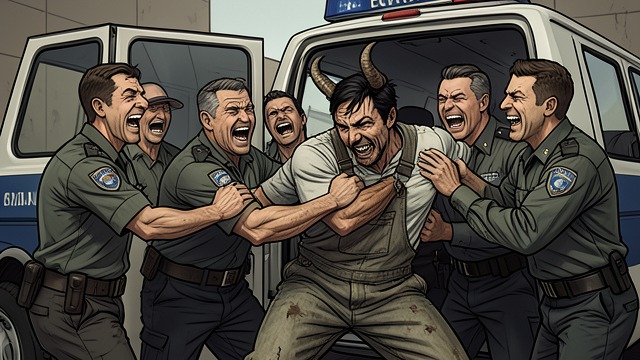
Custody as Degradation
Abuse replaces inquiry
In the police van, officers assault Saladin, ridicule his altered body, and force him into humiliating treatment. Their jokes recast his horns and goat-like features as a reason to deny him ordinary dignity, even before they have established his identity.
Recognition makes him more vulnerable
When the Police National Computer confirms that Saladin is a British citizen, the officers understand that their earlier actions may bring consequences. Rather than release him, they discuss how to manufacture an account that will justify continued custody and discredit him as a witness.
The episode transforms bureaucratic suspicion into deliberate violence. The conflict is not an accidental misunderstanding: the officers recognize the facts and then choose to protect their own authority by altering the story of what happened.
The Detention Centre Escape
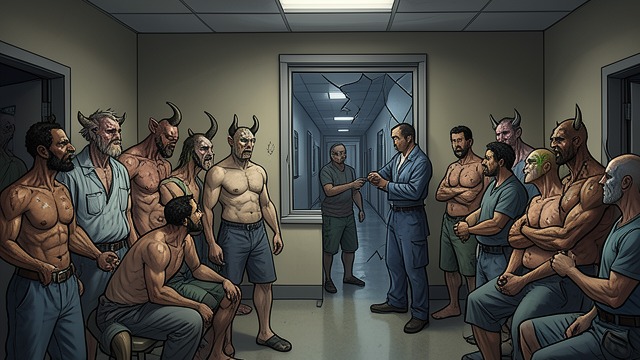
A Captive Community Breaks Out
The institution names its prisoners
In the hospital ward, Saladin encounters other people whose bodies have been transformed and who believe they are being described into new forms. Their accounts suggest that the authorities’ power lies not only in confinement, but in defining what their captives are and what can happen to them.
Refusing the assigned identity
Saladin initially doubts their explanation and is slow to join their plan. He eventually agrees to escape with the patients and detainees, leaving the institution with Hyacinth Phillips and other fugitives. Their departure breaks the officials’ immediate control, though it does not undo what the authorities have done.
The escape shifts the conflict from isolated victimhood to collective resistance. Saladin’s changing body remains a source of fear, but he begins to see that refusing an imposed identity may require acting with others rather than waiting for official recognition.
The Metamorphosis as a Public Conflict
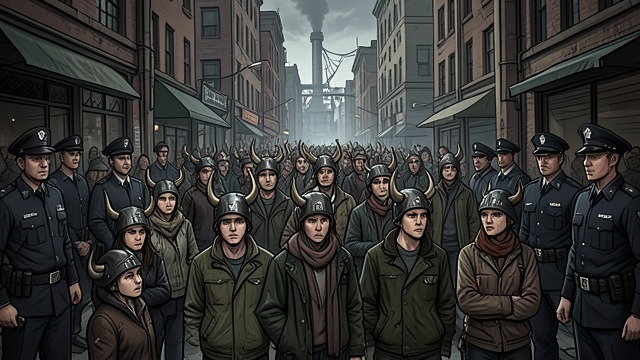
From Suspect to Symbol
A rejected face is reclaimed
Saladin’s goat-like transformation becomes a public image among Black and Asian residents of Brickhall. Young people adopt the horns as a sign of defiance, turning what had served as evidence of his supposed monstrosity into an emblem of resistance to racialized rejection.
The authorities redirect suspicion
As fear and anger intensify, police attention increasingly falls on Black and Asian communities. The arrest of Uhuru Simba for the Granny Ripper murders and his death in custody deepen distrust, while officials connect political dissent and occult suspicion to the same targeted populations.
The conflict expands beyond Saladin’s individual arrest into a struggle over who may define belonging, criminality, and public danger. His emblematic status does not remove the risk of violence; it shows how the same image can be used by the excluded as a claim to agency and by authorities as justification for repression.
During Saladin’s first visit to Bombay after fifteen years in England
The morning after the Bostan falls and Saladin is found on Rosa Diamond’s beach
During transport from Rosa Diamond’s house to the detention facility
After Saladin is hospitalized and placed under observation
After Saladin reaches the Shaandaar and his image spreads through Brickhall
